
Why we uninstall almost every Shopify speed app
A speed app is a script that loads in your store to make your store load faster. What they actually do, why it usually backfires, and the narrow cases where one earns its fee.
Ashraful
Shopify Select Partner
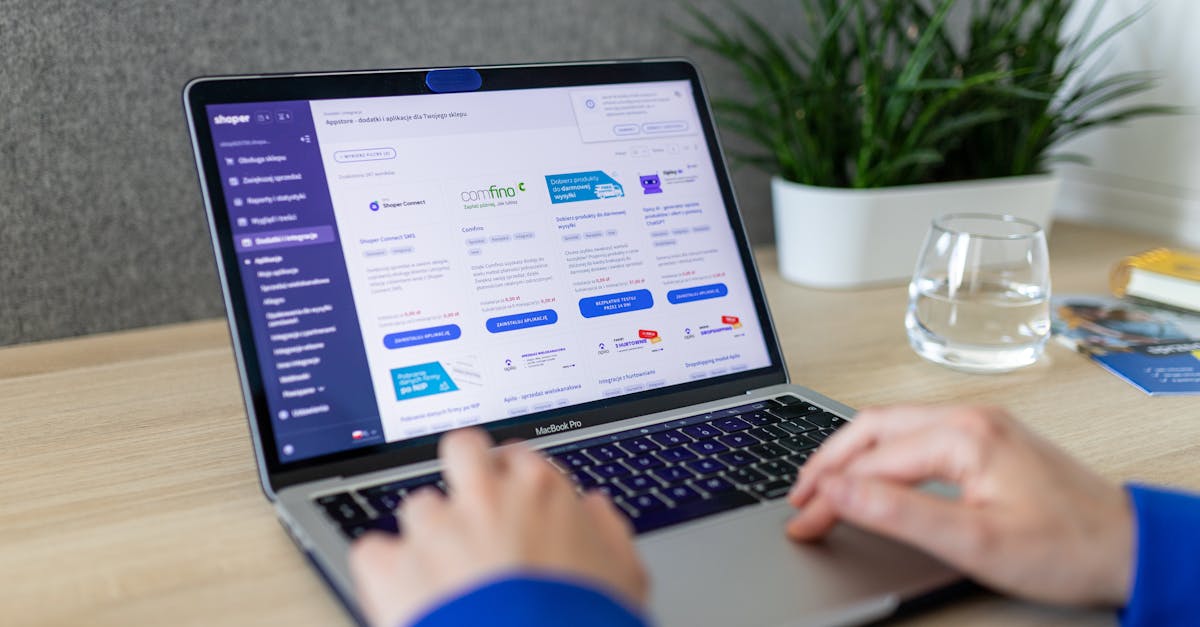
A speed optimisation app is a script that loads in your store to make your store load faster.
Read that back. It is not a gotcha, it is the actual architecture, and it explains most of what follows.
On the majority of speed engagements we run, uninstalling the speed app is step one, and the score goes up. Here is what these apps do, why it usually does not help, and the narrow cases where one is genuinely worth keeping.
What they claim, and what they actually do
Almost every speed app in the store does some combination of four things.
Lazy loading images. Deferring images below the fold until you scroll near them.
Your theme should already do this. Shopify themes built in the last several years use the browser's native loading="lazy", which is free, built in, and requires no third party. An app that adds lazy loading is usually adding JavaScript to do a job the browser does in HTML.
Worse, apps are frequently indiscriminate about it and lazy load the hero or main product image. That is the one image you want fastest, because it is what Google measures as Largest Contentful Paint. We have seen a speed app make LCP worse by exactly this mechanism.
Deferring or async-loading scripts. Delaying third party scripts until after the page renders.
This genuinely can help, and it is also where things break. Defer a script another script depends on and something stops working. Usually it is something you do not test, like a tracking pixel, so you find out when your conversion data looks wrong a month later.
Done properly this is careful, per-script work. Done by an app it is a blanket rule.
Minifying and combining assets. Compressing CSS and JavaScript.
Shopify already serves theme assets minified and gzipped over its CDN. The app is largely re-doing work that is done, and combining files is advice from the HTTP/1.1 era. Under HTTP/2, which every Shopify store uses, parallel requests are cheap and bundling everything into one file can be slower.
Preloading and prefetching. Fetching resources early or guessing the next page.
Preloading the right thing is genuinely one of the highest-value optimisations available. It is also one line of Liquid in your theme, and it needs to know which image is the hero, which an app has to guess.
The cost nobody prices in
To do all that, the app has to load. That means:
- Another DNS lookup and TLS handshake to another domain
- Another JavaScript file, parsed and executed on the main thread, on every page
- Work happening at runtime that could have been done once, at build time, in the theme
So you are spending real load time to run optimisations, most of which are either already handled or should be static changes to your theme.
On a store with a genuinely bad theme, the app might net out positive. On a store with a decent theme, it is frequently negative, and you are paying monthly for the privilege.
What actually moves the number
From over 100 store audits, in order of what they are worth:
Uninstalling apps you do not need. Not speed apps specifically, all of them. The typical store carries 15 to 25 third party domains and six to eight apps nobody would miss. This is free, recovers 15 to 30 Lighthouse points on mobile, and gives you back $60 to $200 a month.
Correct image markup. Proper srcset and sizes so Shopify's CDN serves the right size and format, width and height so nothing jumps, loading="lazy" on everything below the fold and never above it. Ten to twenty points, and it removes the reason to install an image optimiser.
Preloading the hero. One line in the head:
<link rel="preload" as="image"
      href="{{ section.settings.hero | image_url: width: 1600 }}"
      fetchpriority="high">
We have measured 600 to 900ms off LCP from that alone.
Cleaning the tag manager. Old pixels from agencies you no longer use, heatmap tools from a trial, conversion tags for platforms you stopped advertising on. Nobody owns the tag manager, so nothing ever gets removed.
Notice that none of it is an app. All of it is either deleting something or a change to your theme that stays done.
When a speed app is the right call
There are real cases, and dismissing them entirely would be dishonest.
You cannot edit your theme. Locked into a page builder, or on a theme whose author does not allow modification. The app may be the only lever you have.
You have no developer and no budget for one. An imperfect improvement you can install yourself beats a perfect one you never do. Just measure before and after and be willing to uninstall.
The specific app does one thing well. Some do genuinely useful work, particularly around resource hints and critical CSS, that is hard to do by hand. If you have measured a real gain, keep it.
The test is simple: run Lighthouse on a product page, on mobile, with the app on. Uninstall. Run it again. If the number did not improve meaningfully with the app, it is a subscription for nothing.
Measure properly or do not bother
Most people measure this wrong and reach the wrong conclusion.
Test product pages, not the homepage. Your money is on product pages and they carry more apps.
Test on mobile, throttled. Desktop on office wifi tells you nothing about a customer on a phone on mobile data.
Test the same page three times and take the median. Single runs vary enough to hide or invent a 10 point difference.
Watch the three metrics, not the score. LCP under 2.5s, CLS under 0.1, INP under 200ms. The Lighthouse number is a summary; those are the things Google actually uses.
The short version
Speed apps are trying to fix, at runtime and from the outside, problems that should be fixed once, in the theme.
Before you install one: count your apps and remove what you do not use. That is free, it is the biggest single win available to most stores, and it pays you rather than charging you.
If you have one installed and a Lighthouse score in the 50s, the app is not why it is 50 instead of 30. It is part of why it is not 80.
We do Shopify speed work as a fixed-price engagement with a Lighthouse 90+ guarantee and a 14 day re-test, usually shipping inside a week. It involves removing things more often than adding them.
Want the numbers on your store before spending anything? The free store audit tests your real product pages and tells you which of these is costing you most. Or book a 30 minute call and we will go through your app list together.
About the author
Ashraful
Shopify Select Partner, Top Rated Plus on Upwork. 700+ Shopify projects shipped over 7+ years: themes, apps, migrations, speed, Hydrogen. Solo shop, no agency middlemen.
Read the full storyWorking on a Shopify project?
That's what I do every day. Pick whichever feels lower-friction.
More from the blog
Keep reading

Why one developer quotes 3 days and another quotes 3 weeks
Same request, wildly different quotes, and usually nobody explains why. The difference between a theme app extension and a custom app, and the question that settles it.
Read
Why custom Shopify apps break 18 months after launch
Apps rarely fail on launch day. They fail when Shopify retires something they depended on. The three questions to ask about any custom app you own or are commissioning.
ReadThe one line that cuts 800ms off most Shopify stores
Your biggest image is queued behind analytics and app scripts. One preload line in the head fixes it, and three rules decide whether it helps or backfires.
Read